
Indian pharmaceutical companies, which are increasingly choosing to settle patent litigation with global drug majors in the US, would have to be more cautious now.

"The general benchmark that we are getting to hear is in the range of 5-15 per cent. Clearly, the 30-40 per cent hike days are behind us. Along with the slowdown in the US markets, there is a general mismatch in demand and supply. I think firms are being cautious before announcing huge hikes," says Shiv Aggarwal, CEO of ABC Consultants.

Anil Dhirubhai Ambani Group company Reliance Infrastructure (R-Infra) will soon be the official owner of the second phase of the Mumbai Metro project. The state government and the company will sign a concession agreement for the Rs 11,000-crore (Rs 110 billion) project on Thursday, according to sources.

The court's stand is expected to help Wockhardt conclude the deal within a month's time.

The 'First Status Report on Technology Business Incubation' in India also stated that 20 to 30 per cent of incubated companies make it big.

The BCG analysis shows Lupin gave an annualised average TSR of 29.9 per cent, ahead of the 18.4 per cent of Israel-based Teva Pharmaceutical, the world's largest generics maker. Teva is next on the list. Another Indian generic maker, Glenmark, occupies third position, with an 18 per cent TSR to its investors.

Orders are flowing for the water and wastewater treatment industry, as leading players in the domestic market such as VA Tech Wabag, Larsen and Toubro, Thermax and IVRCL Infra have bagged over Rs 2,500 crore (Rs 25 billion) worth of orders in the past two-to-three months.

Novartis markets Nilotinib globally as Tasigna, which is used as the second-line therapy for Gleevec-resistant patients in the case of chronic myelogenous leukemia.

However, analysts say it is not immediately clear if the merger would have any impact on Novartis India, the listed Indian subsidiary of the company.

This increase is despite the decreased growth of drug sales in the US - the world's largest market - which has seen a tightening of regulations and aggressive competition.
Leading Indian drug majors, such as Ranbaxy Laboratories, Dr Reddy's Laboratories, Piramal Healthcare and Wockhardt, are in-licensing popular products from overseas drug makers to boost their domestic sales.
Day Zero was created when demand for IIM graduates had peaked and the institutes had to resort to creative mathematics to accommodate big recruiters without offending the existing ones. Falling job market has forced the B-schools to review the strategy, including placement fee revision.

Mahindra Satyam still has to face 13 Class Action Law suits filed in the US. Analysts peg the cash outflow for these cases to be around $100 million. Satyam also has to get large marquee outsourcing deals, and is yet to restate its accounts which will give investors a good picture of where the company stands.

For start-ups, the model can save 30-40 per cent of the total costs.

Capgemini, the information technology services and consulting major, plans to add 6,000 people in India over the next 12 months, which will make this the company's largest global centre, with over 26,000 employees. The company has a little over 20,000 employees at its headquarters in Paris.
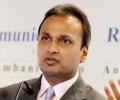
R-Infra quoted Rs 42-crore (Rs 420-million) premium over the bids of rival companies such as GVK Power and Infrastructure Limited, GMR Infrastructure, B Sennaih and C&C, JMC Srei and Sadhbhav, sources told Business Standard.

Bing clocks 18 million visits every month, while Google India has unique monthly visits of 753 million.. Analysts say while Bing is in its infancy, it can grow up rapidly once it powers Yahoo! searches across the world.

The company plans to strengthen the offerings of its digital platform, Adtech, which it launched a few months back.
Move comes within months of acquiring Wockhardt hospitals. Fortis Healthcare, a hospital chain promoted by former Ranbaxy owners Malvinder Mohan Singh and Shivinder Mohan Singh, is close to a major acquisition overseas

India has become the most sought destination for investment by Japanese companies, next to China, and ahead of other Asian countries and emerging economies like Russia, Brazil, Mexico and even the United States and the United Kingdom.
 © 2026 Rediff.com - Investor Information - Advertise with us - Disclaimer - Privacy Policy - Sitemap - Feedback - About us - Terms of use - Grievances